
NEWSLETTER
The Thriving School Brief
Practical, bite-sized strategies for school leaders who want safer classrooms, stronger teacher support, and more time for true instructional leadership. Each issue gives you tools and real-world insights to build a thriving school culture of order, care, and belonging.
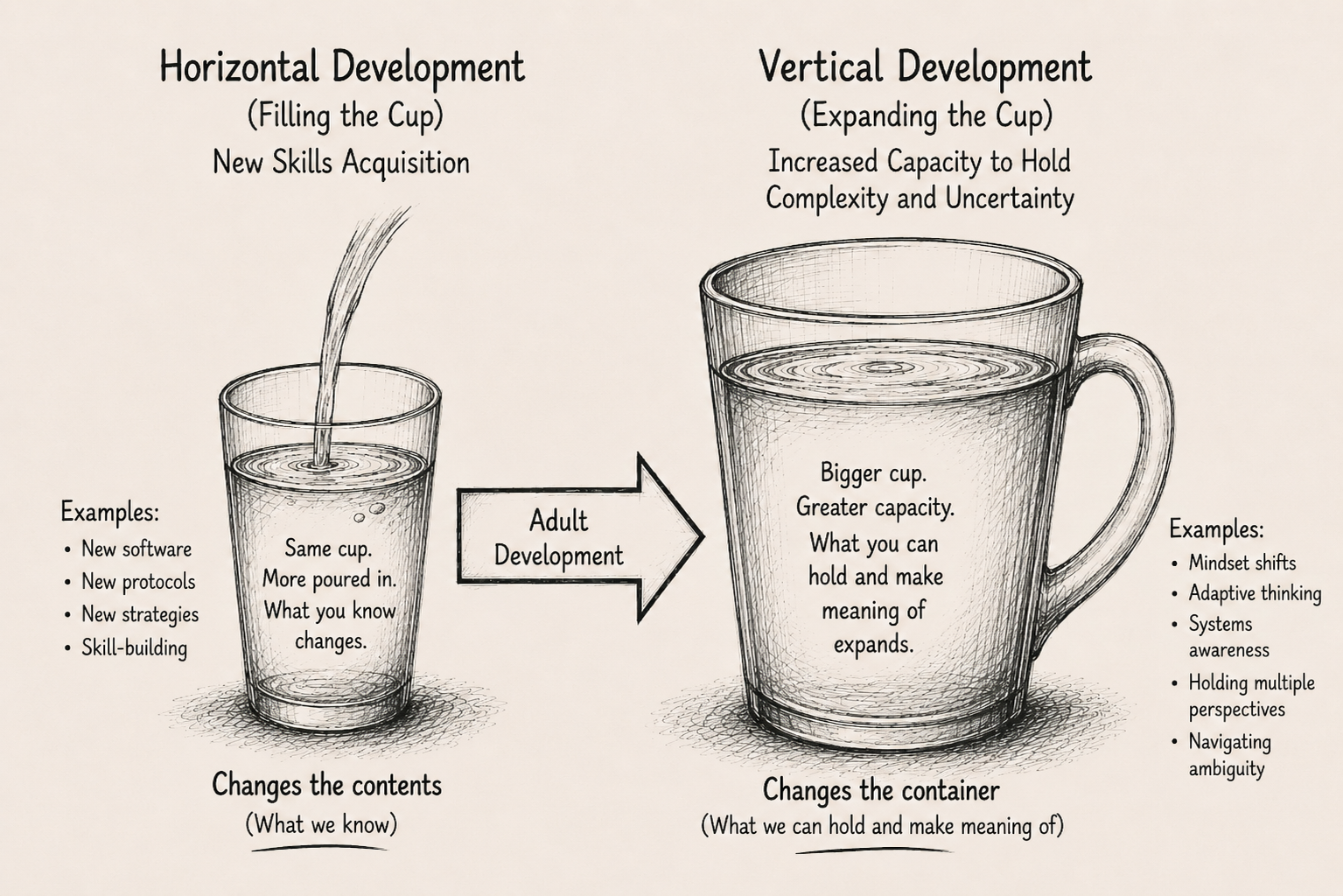
Two Paths of Adult Growth: Horizontal vs. Vertical Development
In a traditional school model, when August rolls around, we tend to put the entire faculty into the same library, hand them the same binder, present the same slide deck on our new initiatives, and expect them to implement the strategies with the exact same level of fidelity.
But throwing a standard, "one-size-fits-all" Professional Development session at your staff will fail them spectacularly.
To understand why, picture two very different educators in your building. First, there is Ginger, a teacher who is overwhelmed by the realities of a new environment and whose classroom has deteriorated into a daily state of crisis. Down the hall is Mason, a highly competent veteran who runs a tight ship but is stagnating because he isn't being challenged to grow.
When we try to support both of these teachers with the same workshop or checklist, we mistake an adaptive challenge for a technical one. We assume they both just have a "skill gap."
In part two of The Evolving Educator series, we explore the crucial difference between Horizontal Development (adding new skills to an educator's existing operating system) and Vertical Development (upgrading the operating system itself). Discover why your drowning novices desperately need a horizontal lifeline, why your competent veterans need vertical expansion, and how you can map out the right path of growth for everyone in your building.
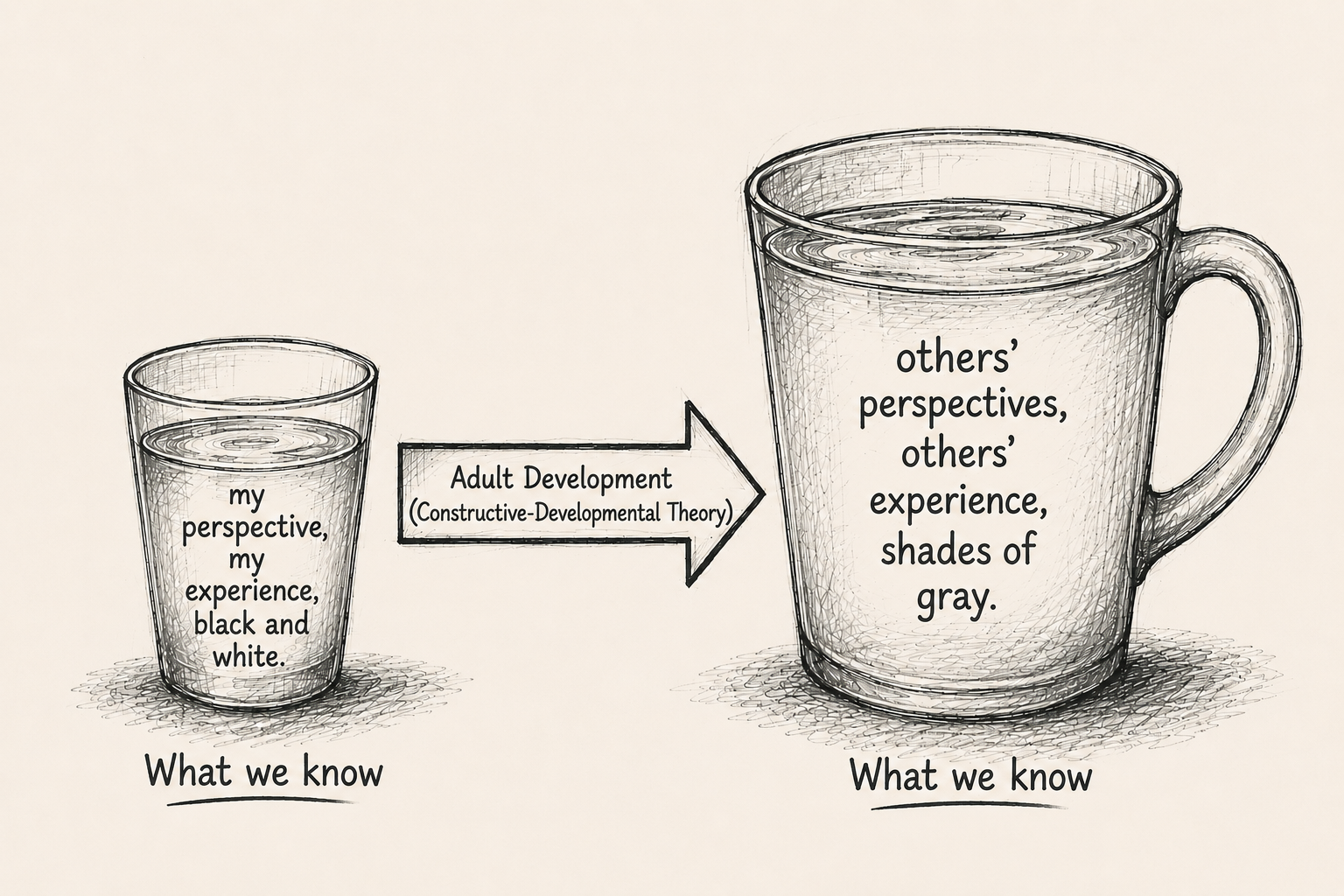
The Evolving Adult Brain: Adults Are Still Becoming. How Are We Supporting Them?
If you were to look at a map of the western watershed without any borders, you would see a vast, interconnected ecosystem where water flows according to ancient, universal laws. Yet, we try to manage this organic system using artificial borders and rigid policies.
I find this remarkably similar to the fraught relationship between how humans actually develop and how school systems try to create change.
In my work with schools, there is a repeated mantra I hear from exhausted school leaders: "It's not the kids; it's the adults!" We impose rigid mandates, "one-size-fits-all" professional development, and static frameworks onto our teachers, expecting immediate behavioral shifts. We treat them like finished products who just need a software update. But just as water follows the natural laws of the water cycle, adults follow the natural laws of human development.
To build a thriving ecosystem in our schools—like a functioning Multi-Tiered System of Supports (MTSS)—we must stop trying to manage the water with artificial borders and start understanding the water cycle itself.
In part one of our new series, The Evolving Educator, we explore the myth of the "finished" adult, the mechanics of Constructive-Developmental Theory, and why asking teachers to shift to a restorative mindset requires a profound developmental leap, not just a behavioral one.

The Cohesive Brain: Tying It All Together
When educators are exhausted, it is incredibly easy to look at adolescent behavior—chronic absenteeism, hallway fights, apathy—as a series of isolated problems to manage. But these behaviors are rarely random; they are deeply rooted in a brain undergoing its most significant rewiring since infancy. In the final piece of our Adolescent Development series, we revisit the students we've met over the last few months and explore how understanding the developing brain fundamentally transforms how we design our classrooms and school systems.
The Plastic Brain: Why Experience Can Change Everything
Experience isn't just something students have; it’s something that shapes them. In the penultimate article of our Adolescent Development series, we explore the science of neuroplasticity and why providing consistent, positive experiences is the most effective way to change a student's trajectory.

The Social Brain - Belonging, Status, Identity and What Secondary Schools Should Intentionally Design For
Adolescent behavior is shaped as much by belonging and status as by rules and consequences. The social brain is especially sensitive to peer evaluation, humiliation, and public correction.
This article explores what is physically happening in the adolescent social brain, how school culture and climate shape behavior, and how MTSS systems can promote belonging, prevent escalation, and intervene meaningfully when conflict occurs.
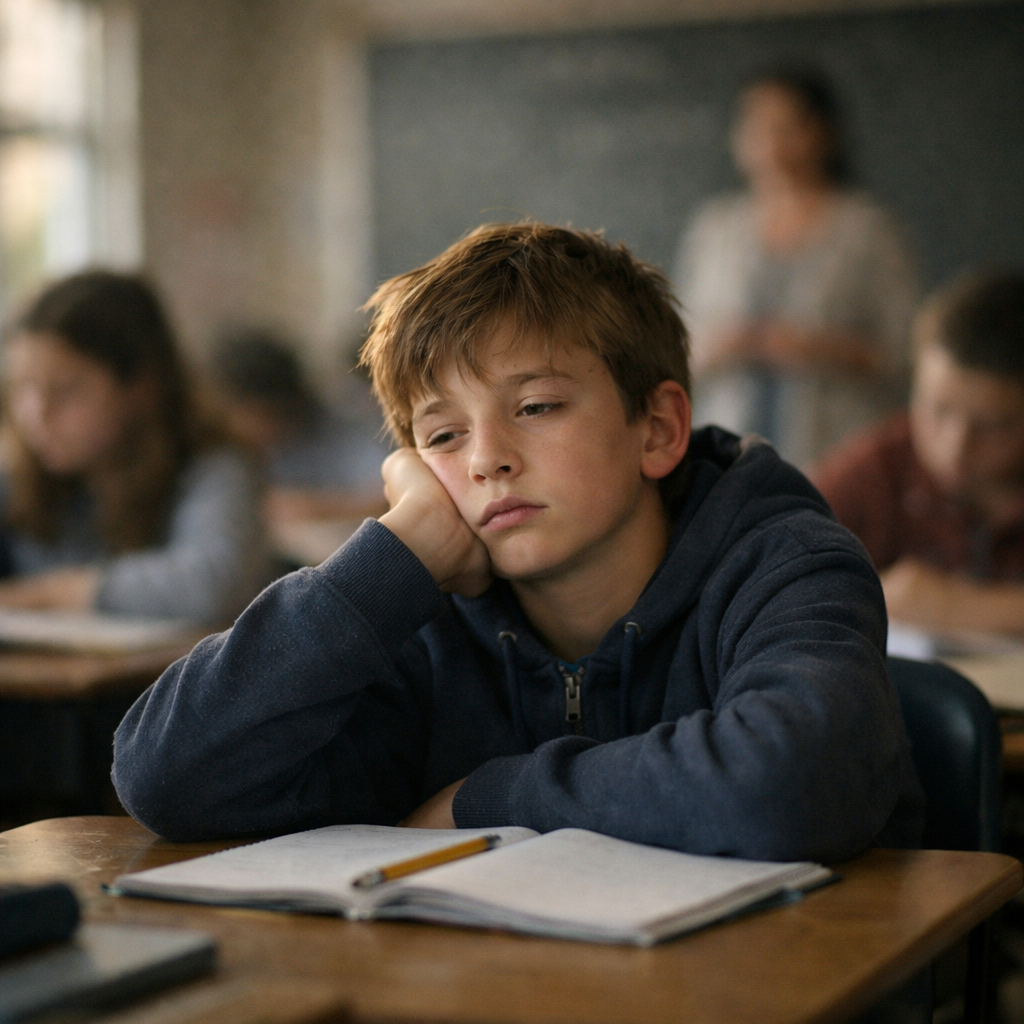
The Tired Brain - Why Exhaustion Changes Behavior, Regulation, and Learning
Sleep deprivation changes the adolescent brain in measurable ways. When middle school students are exhausted, impulse control weakens, emotional reactivity increases, and executive functioning narrows. What looks like defiance may actually be diminished access to regulation. In this article, I explore how sleep science should inform classroom design and MTSS systems in secondary schools.
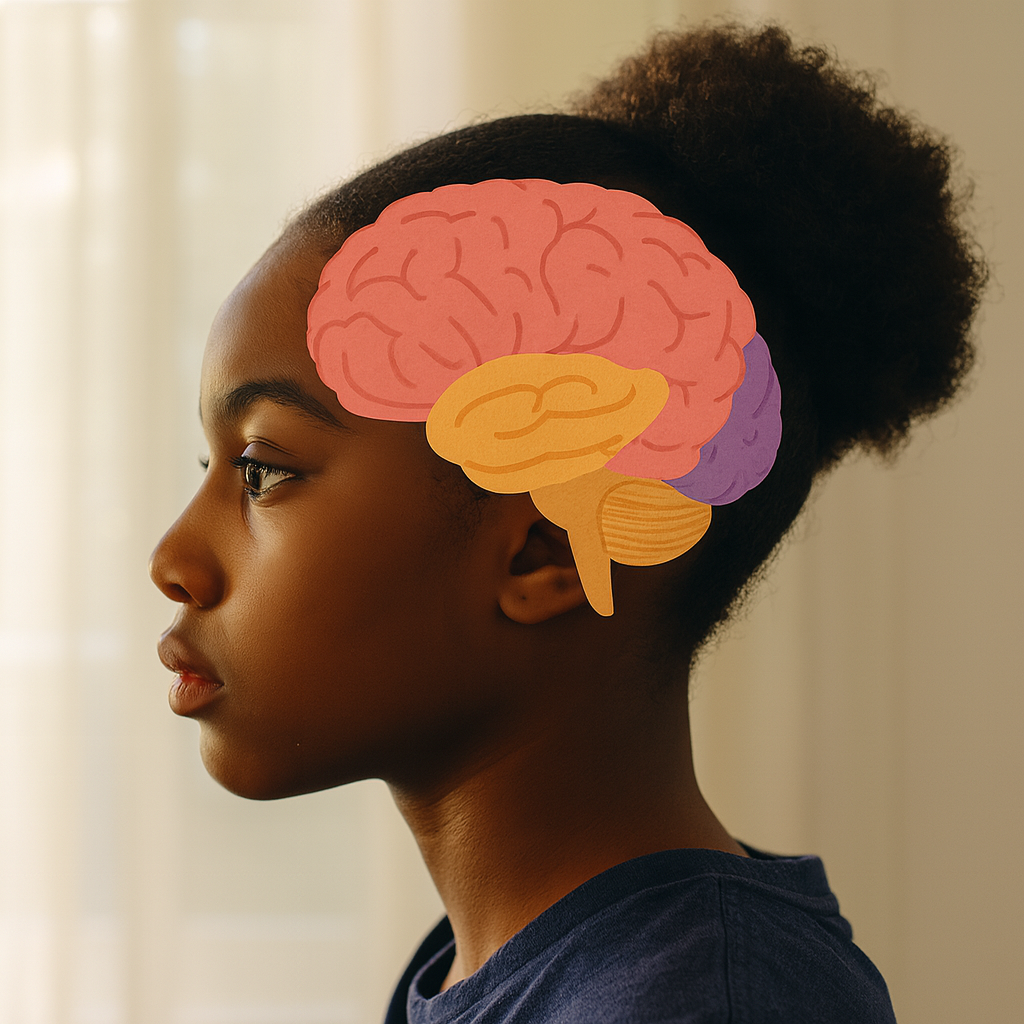
The Emotional Brain - Feeling Before Thinking: What Adolescents Need When Emotions Lead
Adolescents feel before they think. During adolescence, the emotional brain develops faster than the regulatory systems that manage it. This article explores the neuroscience behind emotional reactivity, why “knowing better” doesn’t always mean “doing better,” and how schools can design Tier 1 systems that support regulation, reflection, and growth.

The Integrating Brain - From Chaos to Cohesion: How Adolescents Learn to Hold Complexity
Adolescence often looks inconsistent from the outside. Insightful one moment, impulsive the next. Calm in one setting, overwhelmed in another. This article explores why that unevenness is not a failure of maturity, but a hallmark of development in progress. Drawing on neuroscience, classroom practice, and a real student story, this piece examines how the integrating brain links emotion, thinking, identity, and relationships—and what schools can do to support coherence rather than control.

The Myelinating Brain - Practice Makes Pathways: How Repetition Shapes Adolescent Learning, Behavior, and Belonging
Why do some habits become automatic so quickly in adolescence—while others feel impossible to change?
This article explores the myelinating adolescent brain and how repetition shapes learning, behavior, and belonging. Through the story of a school-avoidant ninth grader, it shows why routines, consistency, and supportive systems matter more than motivation alone—and how schools can design Tier 1 and MTSS structures that reinforce persistence rather than avoidance.

The Pruning Brain - Use It or Lose It: How Adolescents Begin to Wire Who They Are Becoming
When I first started teaching, I believed that if I designed engaging lessons and maintained clear expectations, students would naturally respond with focus and motivation. I thought disengagement was something to fix and inconsistency was something to correct. I did not yet understand how much of what I was seeing was a reflection of adolescent development.
Years later, I would come to understand that adolescence is not a time of simple growth. It is a time of refinement. The adolescent brain is not adding endlessly. It is choosing.
This process of choosing is what neuroscientists refer to as synaptic pruning. It is the brain’s way of deciding which connections to strengthen and which to let fade. But pruning is not simply a neurological event. It is deeply personal. It is how adolescents begin to shape identity, values, interests, and purpose.
Understanding this matters because many of the behaviors that frustrate educators are not signs of apathy or immaturity. They are signs of specialization in progress.

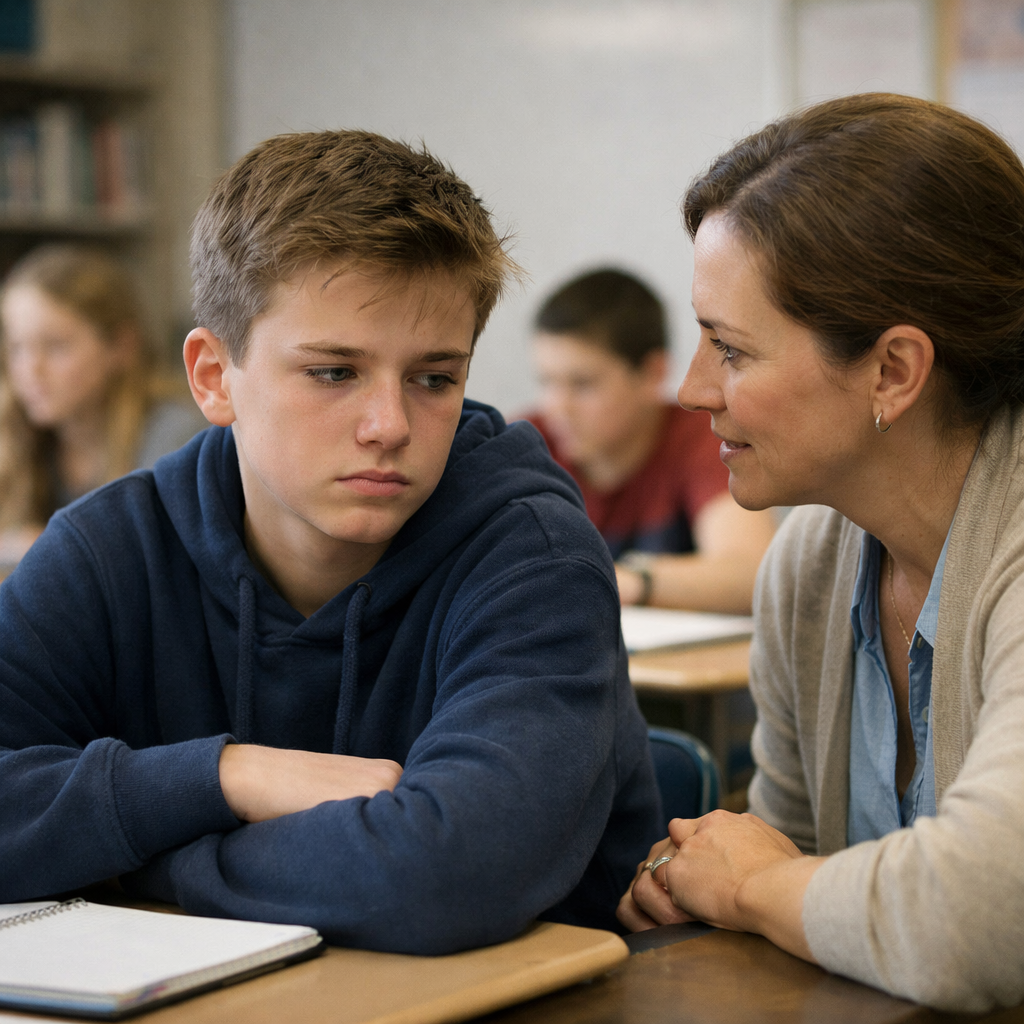
Meeting the Adolescent Brain Where It Is
When I stepped out of my classroom for two minutes and returned to a full-blown marker war, I did what any overwhelmed 23-year-old would do: I yelled. Then I hit my head on a filing cabinet and ended up in urgent care.
I used to think moments like this were “classroom management problems.”
Now I know they were developmental signals.
Adolescents aren’t broken. Their brains are becoming.
And most of us were never taught what that means for teaching, learning, or MTSS systems.
That’s why I’m launching a new series: Inside the Adolescent Mind — exploring what the developing brain needs from us, and how schools can design systems aligned with human development, not compliance.
If you’ve ever wondered why students react the way they do (or why you react to them the way you do), this series is for you.

Making Durable Skills Durable: When Adults Shift the System
When I first walked into New Britain High School, mornings were chaotic. More than 2,400 students entered through 510 exterior doors. Some arrived early and wandered the halls; others came rushing in just as the bell rang. Teachers started their days already tense, trying to corral energy that felt scattered before the first class even began.

Building Academic Efficacy in Adolescents
When I think about academic efficacy—the belief that you can learn, problem-solve, and persist—I think of Julia.

Building Social Efficacy in Adolescence
Social development is one of the most important and complex milestones of adolescence. During these years, the “social brain” is rapidly developing, making young people more sensitive to peer feedback, belonging, and social norms. That sensitivity can lead to missteps—but also provides an enormous opportunity for growth.

Building Self-Management in Adolescence
My eleven-year-old daughter loves screens. She can lose herself for hours in streaming shows or watching YouTube gamers play her favorite Nintendo titles, sometimes while she’s playing those same games herself. Because she loves these things so much (and they’re so designed to keep her hooked), we’ve created a structure to help her develop self-management skills: the screen-time dollar system.

The Power of Self-Awareness in Adolescence
“Trust.”
That’s what my 13-year-old daughter tells me at least once a week.
She says this when I’m encroaching on her autonomy—“It’s cold outside, are you going to wear a jacket?” or “Do you have homework tonight?” And she’s right. I do need to trust.

The Changing Landscape of Adolescence
I taught middle and high school from 1999 to 2009 — long before Chromebooks, Google Classroom, and AI became part of students’ daily lives. You might think a decade in the classroom would have fully prepared me to parent my own two middle schoolers. In some ways it has. I understand adolescent development: their drive to experiment, to define their identity and autonomy, and their simultaneous need for clear expectations and boundaries.
But teaching looks very different today.

Using AI to Improve Writing in 7th Grade: Is it Cheating?
“Is this cheating?” my 7th-grade daughter recently asked me. She was working on an essay for her ELA class on the topic “What we can learn from other generations.” Like many 12-year-olds, she sees herself as the hero of her own story and chose to write about teaching her sister to ride a bike. As the deadline loomed, she felt overwhelmed trying to finalize the essay by the next day.

Turning Chaos into Community at New Britain High School
In 2018, morning entry at New Britain High School had become a serious challenge. Students entered the school through any of its 510 exterior doors and had no designated place to go before the first bell. Teachers arrived early, only to find loud, unsupervised students roaming the hallways. Administrators and security staff were stretched thin, responding to frequent conflicts, fights, and general disorder.