
From Passenger to Explorer: Rethinking Adolescent Engagement
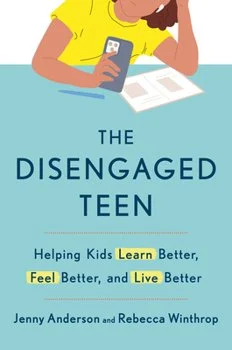
Disengaged Teen Book Club Synopsis
One of the most grounding ideas in The Disengaged Teen is this: engagement is not a personality trait; it’s a state.
Students don’t are disengaged. They move through modes of engagement.
The authors describe engagement as a dynamic interplay between how young people think, feel, and act, a definition that aligns closely with decades of research on cognitive, emotional, and behavioral engagement. What the book adds, and what made our conversation so rich, is its explicit pairing of engagement with agency: a young person’s ability to initiate, choose, and direct their own learning.
When we place engagement and agency on two intersecting axes, four recognizable modes emerge.
Below is a synopsis drawn from the rich Book Club conversation I had with Kyle Conley, Co-Founder of Building Leaders, and Linda Flohr, Assistant Principal of West Middle School in Grand Junction, CO.
You can listen to the entire conversation on the Efficacious Educator Podcast on YouTube, Apple Podcasts, or Spotify.
1. Passenger Mode
Low engagement, low agency
These are students who appear compliant but disconnected. They show up, complete tasks, and move through the day—but without curiosity, ownership, or emotional investment.
As Linda shared in the book club conversation, passenger mode is often protective. Students may be tired, hungry, overwhelmed, or navigating stressors far beyond the classroom. Going through the motions can be a way to survive the day.
One moment from the book—and from our discussion—that stayed with us was this unsettling image: a student sitting in class, staring at the same page of a book for an entire period, unnoticed.
Passenger mode reminds us that behavior alone is a poor proxy for engagement.
A small but powerful shift?
Offering low-stakes choices, ex, “How would you like to approach this task?” Choice, even in modest forms, can begin rebuilding agency.
As we said in the episode, agency is a muscle. When it hasn’t been exercised, students may not know how to respond at first. That silence isn’t resistance—it’s unfamiliarity with how to chart one’s own course.
2. Achiever Mode
High engagement, low agency
Achievers are often celebrated. They work hard, follow directions, earn praise, and meet expectations. But as the book makes clear—and as both Kyle and Linda reflected—achiever mode carries hidden risks.
When success is driven primarily by external validation, students may struggle to answer a deeper question: What do I want?
Several stories in the book illustrate this fragility—students who excelled all the way into elite colleges, only to unravel when the structure disappeared and the applause faded.
As Kyle shared candidly, many of us are parenting or teaching young people who have learned to equate worth with performance. And while that path can look successful from the outside, it often comes at the cost of curiosity, risk-taking, and self-direction.
The challenge for achievers isn’t motivation—it’s purpose.
Supporting these students means shifting from “Do the thing” to “Why does this matter to you?” and creating opportunities for them to define success on their own terms.
3. Resistor Mode
Low engagement, high agency (against learning)
Resistors are frequently misunderstood.
In our conversation, Linda named what many educators know from experience: resistance is rarely about defiance. It’s more often about frustration, shame, or unmet needs. Students may push back to protect themselves from feeling exposed, incapable, or disconnected.
One powerful reframe from the book, and echoed strongly by both panelists, is this: Resistor behavior is communication.
These students have agency. They just don’t yet have the skills or support to use it in the service of learning.
A critical misstep adults often make is solving problems about students instead of with them. Including young people in problem-solving conversations doesn’t just build engagement; it teaches the very skills they’re missing.
As we discussed, the question shifts from:
“How do we make them comply?”
to:
“What’s not working and what skill do you need to grow?”
4. Explorer Mode
High engagement, high agency
Explorer mode is where joy lives.
These are moments when students are curious, motivated, and self-directed—when learning feels meaningful rather than imposed. Importantly, the book makes clear that explorer mode is rarely a permanent state. Most students arrive there after moving through other modes.
What creates the conditions for exploration?
Over and over in our discussion, three elements surfaced:
Choice
Relevance
Psychological safety
When students feel safe to try, fail, ask questions, and pursue interests, engagement follows.
One quote from the conversation captured this beautifully:
“Interests are to adolescents what chew toys are to puppies.”
It’s a playful metaphor, but the insight is serious: interests aren’t distractions from learning—they’re gateways into it.
A Final Reflection
One of my favorite moments in the episode came near the end, when we talked about trust.
As parents, educators, and leaders, trusting adolescents to explore, to struggle, to choose, can feel risky. But without trust, agency can’t grow.
This book club exists because I believe we need shared language, shared frameworks, and shared reflection to do this work welltogether.
If this conversation resonated with you, I invite you to:
🎧 Listen to the full episode
🗳 Vote on our next book club selection
💬 Share this with a colleague, parent, or friend who’s navigating disengagement
