
Meeting the Adolescent Brain Where It Is
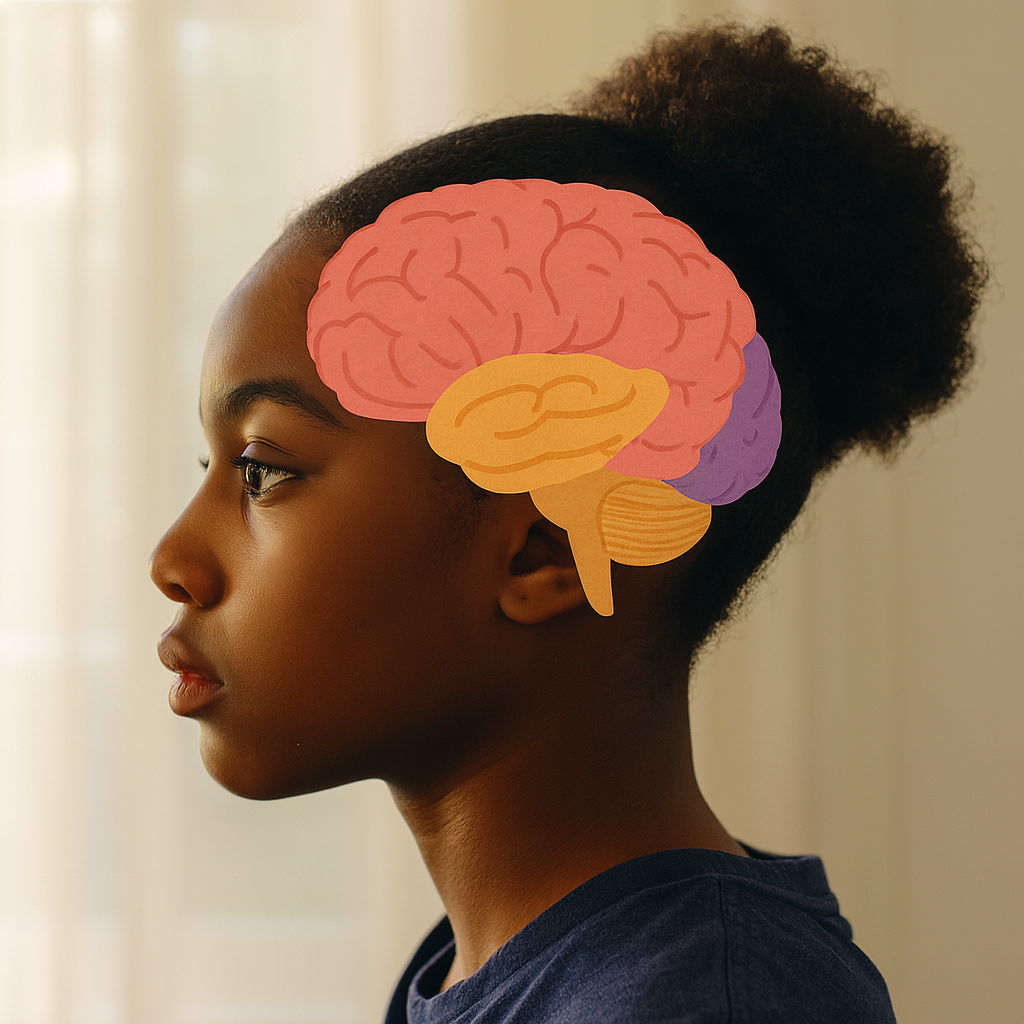
Part One in An Eight-Part Series in The Thriving School Brief
In what ways might we design school systems that align with the way adolescents actually develop?
Meeting the Adolescent Brain Where It Is
When I first started teaching at 23, my adolescent brain was still in its final stages of development.
Which is why, one day, during a full-day advisory session, I made the rookie mistake of leaving my classroom unattended for just a few minutes to pick up copies. When I came back, it looked like a crime scene—students laughing, ducking, and throwing markers across the room like missiles.
I did what many of us do when caught off guard: I yelled. I was angry, embarrassed, and overwhelmed. I snatched the markers, stuffed them into my filing cabinet, dropped one, bent to grab it—and smacked my head on the metal corner, hard enough to end up in urgent care with a minor concussion and a very bruised sense of confidence.
I tell this story not to highlight a classroom disaster, but to remind us that our brains are developing right alongside our students’.
At 23, my prefrontal cortex—the part of the brain responsible for impulse control, decision-making, and emotional regulation—was still completing its final round of wiring. My students, in the thick of adolescence, were doing the same. Their limbic systems were running the show, tuned to novelty, emotion, and social belonging. My frustration collided with their energy, and none of us had the tools to name what was really happening in our minds and bodies.
Looking back, I see that moment differently. I wasn’t just managing behavior; I was trying to manage brains under construction, including my own.
And that is why understanding adolescent brain development should be required learning for anyone who teaches or leads in a middle or high school.
Why This Series Exists
Everywhere I go in schools, I hear the same things:
“This is the 9th grade; why don’t students know how to ________ (fill in the blank).”
“Kids just don’t have the coping skills they need.”
“Our teachers are exhausted by constant behavior management.”
“Our students are just not getting what they need from us.”
These aren’t personal failures. They’re developmental mismatches.
Adolescents are in one of the most dramatic periods of brain, identity, emotional, and social growth of the human lifespan. Yet most school structures—from schedules to discipline to instructional routines—were not designed with any of this in mind.
Educators are doing heroic work in systems that often ignore the basic developmental science of adolescence (and adult development for that matter, but that is a future series). This series exists to close that gap.
Why Understanding Adolescence Changes Everything
When we understand adolescent development—deeply, not superficially—everything shifts:
We stop taking behavior personally.
We stop interpreting emotion as disrespect.
We stop expecting skills students don’t yet have.
We start designing for the humans in front of us rather than the systems we inherited.
And we begin to see that every sigh, every outburst, every retreat, every spark of brilliance is actually a signal from a brain and body in the act of becoming.
Understanding development helps us create:
classrooms that regulate rather than escalate
systems that build agency rather than compliance
restorative practices that truly repair relationships
MTSS supports that respond to developmental needs
environments where both young people and adults can grow
This is where the Durable Skills for School and Beyond come in.
These skills—self-awareness, self-management, social efficacy, academic efficacy—are not just character traits or SEL skills. They are developmental capacities linked to how the adolescent brain grows.
To cultivate them, schools need systems aligned with human development—not the other way around.
What You Will Get From This Series
Over the next several weeks, we’ll explore:
why adolescents behave the way they do
what the developing brain is primed for
how schools can align environments, routines, and expectations to developmental science
how durable skills are strengthened through intentional system design
what adults can do to support adolescents without losing their minds in the process
Each article will address a core pain point you’ve named:
misaligned Tier 1 systems
overwhelmed teachers
fragile student belonging
reactive behavior responses
unclear expectations
a need for coherence in MTSS
The promise is simple:
When schools align with the science of adolescence, coherence increases, confidence returns, and both students and educators thrive.
What’s Coming Next
This series, Inside the Adolescent Mind, explores seven dimensions of brain development and their implications for teaching, belonging, and school design:
The Pruning Brain – Use it or lose it: How adolescents wire their worlds.
The Myelinating Brain – Practice makes pathways.
The Integrating Brain – From chaos to cohesion: Building well-being through connection.
The Emotional Brain – Feeling before thinking: Harnessing the limbic leap.
The Tired Brain – Sleep, stress, and start times.
The Social Brain – Connection is the curriculum.
The Plastic Brain – Teaching for rewiring: Experience changes everything.
Each article unpacks one of these themes—connecting what’s happening neurologically to the classroom moves that help adolescents thrive.
A Final Reflection
Adolescents aren’t broken. They’re becoming.
And so are we.
Every time we choose curiosity over control, reflection over reaction, or connection over compliance, we’re engaging our own prefrontal cortex, the same region our students are still developing.
Teaching adolescents, in many ways, is a partnership in growth. It’s the practice of co-regulation and co-evolution.
When we align our classrooms with what the adolescent brain most needs—safety, belonging, purpose, and agency—we don’t just improve learning outcomes. We nurture the kind of awareness and empathy that lasts a lifetime.
