
NEWSLETTER
The Thriving School Brief
Practical, bite-sized strategies for school leaders who want safer classrooms, stronger teacher support, and more time for true instructional leadership. Each issue gives you tools and real-world insights to build a thriving school culture of order, care, and belonging.
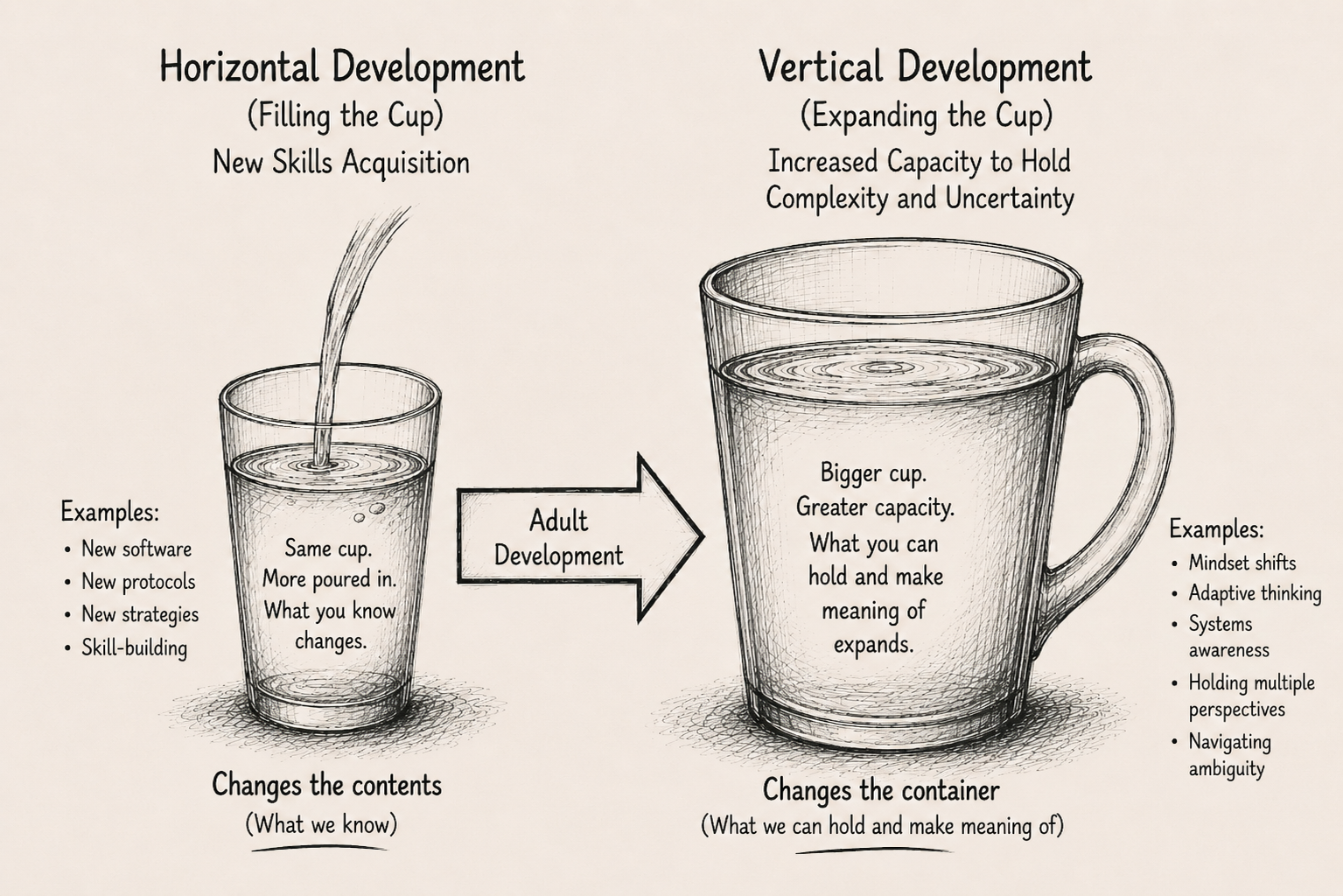
Two Paths of Adult Growth: Horizontal vs. Vertical Development
In a traditional school model, when August rolls around, we tend to put the entire faculty into the same library, hand them the same binder, present the same slide deck on our new initiatives, and expect them to implement the strategies with the exact same level of fidelity.
But throwing a standard, "one-size-fits-all" Professional Development session at your staff will fail them spectacularly.
To understand why, picture two very different educators in your building. First, there is Ginger, a teacher who is overwhelmed by the realities of a new environment and whose classroom has deteriorated into a daily state of crisis. Down the hall is Mason, a highly competent veteran who runs a tight ship but is stagnating because he isn't being challenged to grow.
When we try to support both of these teachers with the same workshop or checklist, we mistake an adaptive challenge for a technical one. We assume they both just have a "skill gap."
In part two of The Evolving Educator series, we explore the crucial difference between Horizontal Development (adding new skills to an educator's existing operating system) and Vertical Development (upgrading the operating system itself). Discover why your drowning novices desperately need a horizontal lifeline, why your competent veterans need vertical expansion, and how you can map out the right path of growth for everyone in your building.
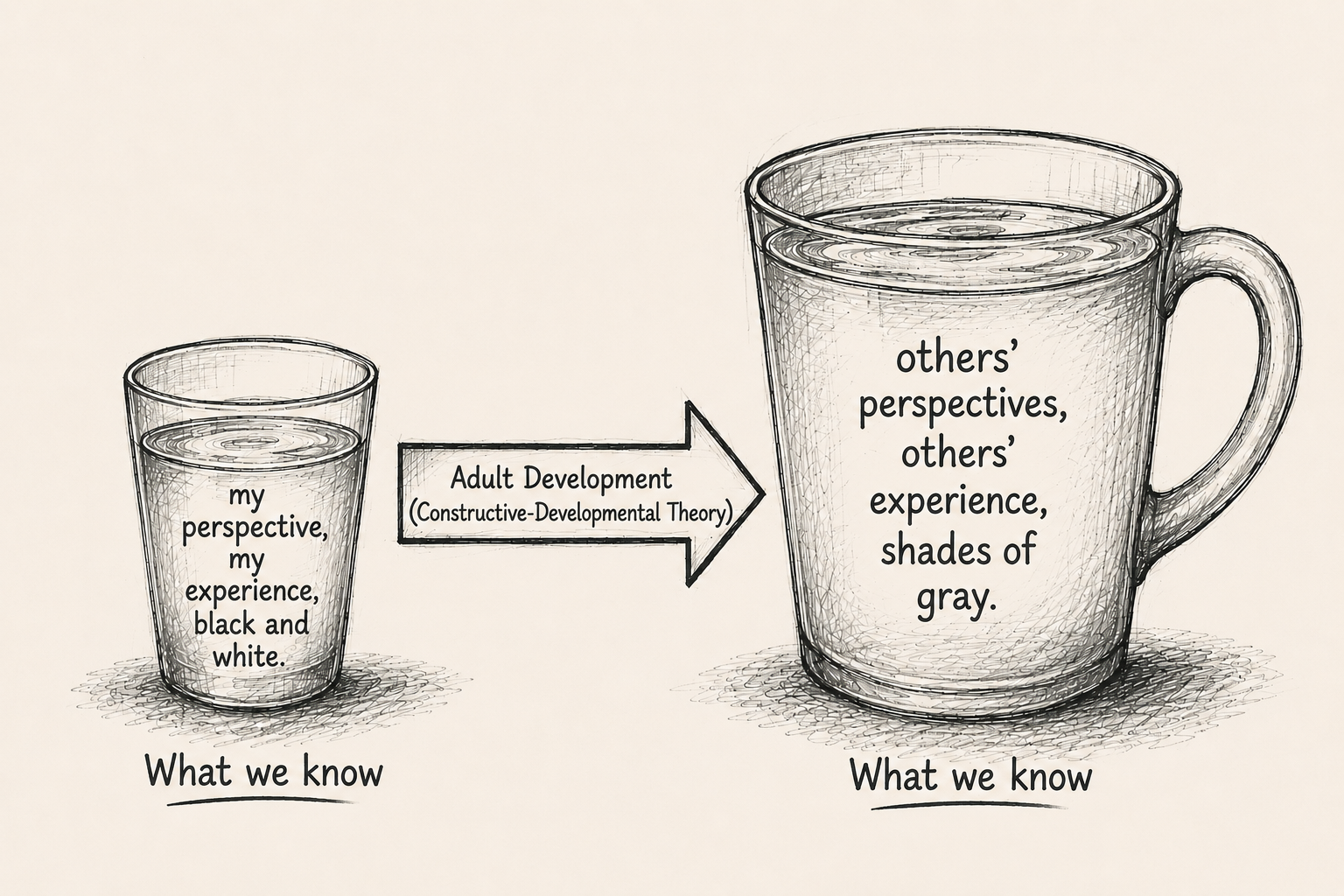
The Evolving Adult Brain: Adults Are Still Becoming. How Are We Supporting Them?
If you were to look at a map of the western watershed without any borders, you would see a vast, interconnected ecosystem where water flows according to ancient, universal laws. Yet, we try to manage this organic system using artificial borders and rigid policies.
I find this remarkably similar to the fraught relationship between how humans actually develop and how school systems try to create change.
In my work with schools, there is a repeated mantra I hear from exhausted school leaders: "It's not the kids; it's the adults!" We impose rigid mandates, "one-size-fits-all" professional development, and static frameworks onto our teachers, expecting immediate behavioral shifts. We treat them like finished products who just need a software update. But just as water follows the natural laws of the water cycle, adults follow the natural laws of human development.
To build a thriving ecosystem in our schools—like a functioning Multi-Tiered System of Supports (MTSS)—we must stop trying to manage the water with artificial borders and start understanding the water cycle itself.
In part one of our new series, The Evolving Educator, we explore the myth of the "finished" adult, the mechanics of Constructive-Developmental Theory, and why asking teachers to shift to a restorative mindset requires a profound developmental leap, not just a behavioral one.