
Part Five in An Eight-Part Series in The Thriving School Brief
About This Series
Inside the Adolescent Mind is a multi-part series examining how adolescent brain development intersects with identity, learning, and school design.
In the articles ahead, we will explore how emotions shape behavior, how sleep and stress affect cognition, how belonging influences decision-making, and how experience drives growth across adolescence.
Throughout the series, we return to a shared inquiry:
How might we design school systems that align with how adolescents actually develop?
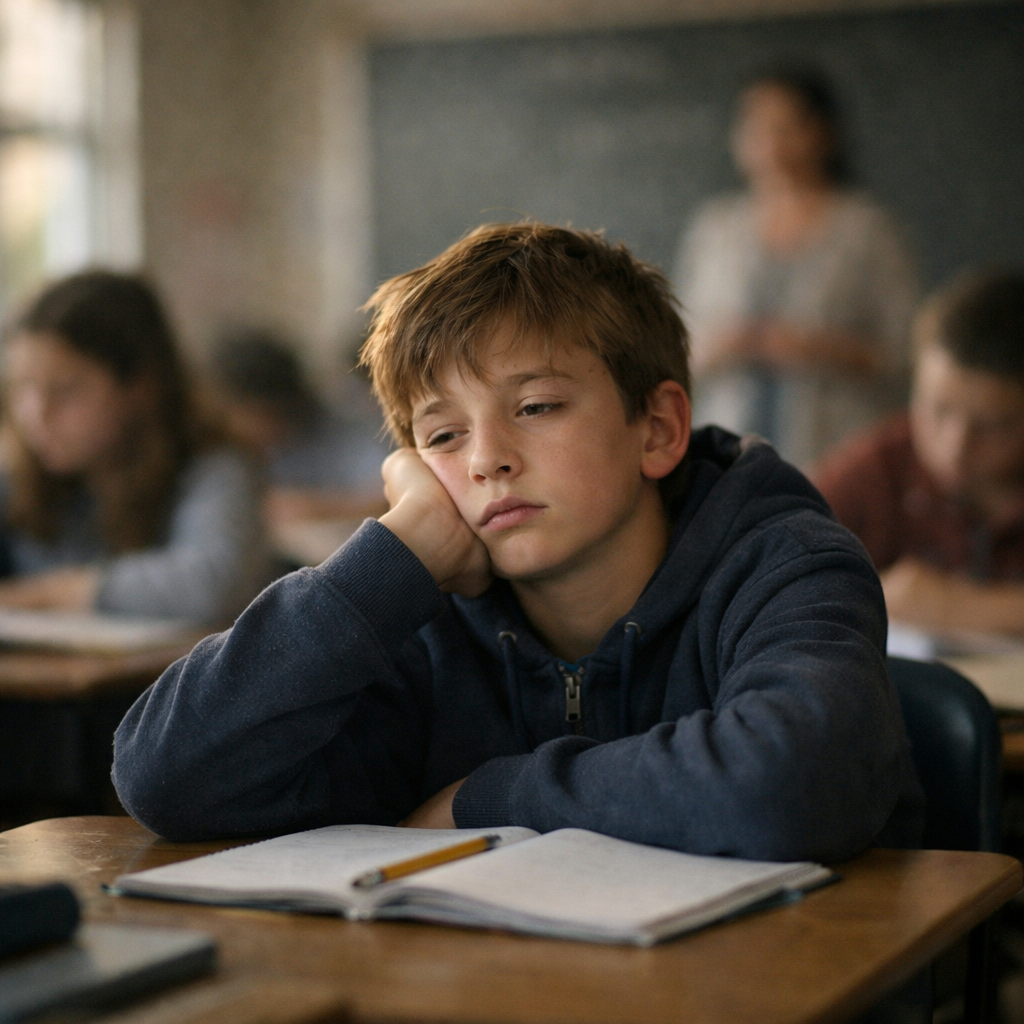
An assistant principal I coach is trying hard to support a 6th grade student who spends nearly as much time in her office as in the classroom.
He is impulsive. He uses disrespectful language. He moves constantly. He distracts peers. And yet, one-on-one, he is thoughtful and responsive. Sometimes he seems genuinely confused that what he is doing is bothering others.
In her office, he can reflect. He can articulate expectations. He can explain what he “should” have done. Then he returns to class and repeats the same behaviors.
She has noticed something. On the days after he stays up late playing video games, everything escalates.
He lives with extended family. Sleep routines are inconsistent. He has experienced trauma. Video games are one of the few places where he feels competent and in control. When he does not sleep, everything in his day becomes harder.
We all know what it feels like to be tired. We are shorter, less flexible, and more easily overwhelmed. Small problems feel disproportionate. Now imagine that state in a brain still wiring itself for impulse control, emotional regulation, and perspective-taking.
This adolescent’s sleep deprivation outside of school directly shapes his behavior in school. So what is this AP to do?
The Tired Brain Is a Different Brain
During adolescence, sleep is not passive rest. It is active neurological construction. During sleep, the brain refines synaptic pruning, consolidates learning, processes emotional experiences, recalibrates stress hormones, and strengthens neural connections. Sleep is not separate from development. It is one of its engines.
Adolescents also experience a biological shift in circadian rhythm. Melatonin releases later at night, meaning the brain becomes alert later in the evening and struggles to fall asleep early. This circadian phase shift is a well-documented feature of adolescent brain development, not a sign of defiance or irresponsibility.
When sleep is shortened—whether by gaming, anxiety, instability at home, or late-night stimulation—the effects are immediate and measurable.
Sleep deprivation reduces activity in the prefrontal cortex, the region responsible for impulse control, planning, perspective-taking, and emotional regulation. At the same time, it increases reactivity in the amygdala and other limbic structures.
The feeling system accelerates. The braking system weakens.
A tired brain is a more reactive brain.
What Sleep Loss Looks Like in School
The assistant principal notices predictable patterns. On nights when this student stays up late gaming, the next day includes more impulsive blurting, lower frustration tolerance, increased peer conflict, and more frequent office referrals. None of these behaviors are entirely new, but their intensity increases.
Under fatigue, working memory narrows. Inhibitory control decreases. Emotional thresholds lower. Social threat sensitivity increases. Cognitive flexibility shrinks. Time horizons shorten. A tired adolescent brain struggles to pause before acting, to hold long-term consequences in mind, and to interpret neutral feedback accurately.
Now layer trauma onto that equation. Trauma heightens baseline vigilance and sensitizes threat detection systems. When sleep deprivation compounds that state, regulatory capacity becomes even thinner.
The student is not simply choosing impulsivity. His margin for regulation is smaller.
From the outside, this looks like inconsistency. In the AP’s office, he can reflect and explain expectations clearly. In the classroom, he “chooses” not to follow through.
This is where adults often say, “He knows better.”
Yes.
And when he is exhausted, he cannot consistently access what he knows. Knowing better and doing better are not the same thing in a sleep-deprived adolescent brain.
Why Video Games Make Sense (Even When They Make Things Worse)
It is easy to focus on the gaming behavior and conclude that it must stop. But that framing misses the function. Video games offer immediate reward, clear rules, visible progress, competence, social connection, and a sense of agency. For a student who often feels corrected, monitored, or behind, gaming may be the one place he experiences mastery and agency.
If school feels like a place where adults are frequently frustrated with you, and home feels unstable, and your body feels constantly on alert, gaming becomes more than entertainment. It becomes a safe space for regulation.
The problem is not that gaming feels good. The problem is that it displaces sleep, and sleep is the foundation of regulation. If we remove the coping tool without replacing its function, escalation is likely.
The question is not simply why he stays up. The question is what need is being met at midnight that is not being met at noon.
What Is Physically Happening in the Tired Brain
At a physiological level, sleep deprivation disrupts communication between the prefrontal cortex and the amygdala. Under rested conditions, the amygdala detects emotional salience while the prefrontal cortex interprets and modulates the response. Regulatory control is more consistently available. Language and perspective are easier to access.
Under sleep deprivation, amygdala reactivity increases while prefrontal modulation weakens. Emotional responses intensify. Frustration thresholds drop. Impulse control diminishes. Brain imaging studies show reduced functional connectivity between emotional and regulatory regions after sleep loss. In plain terms, the systems responsible for regulation are still present, but their coordination is compromised.
Adolescents are already more sensitive to social evaluation than adults. Peer perception carries enormous weight. Public embarrassment activates powerful neural responses. When fatigue is added, social threat feels amplified.
A sarcastic comment can feel catastrophic. A revoked privilege can feel existential. Small moments escalate quickly because the nervous system has less buffer.
In our previous exploration of the integrating brain, we discussed coherence as the capacity for different neural systems to remain in communication. Fatigue increases fragmentation. Emotional signals overpower reflective systems. Impulse outruns inhibition. One feeling eclipses competing perspectives.
For adolescents, fragmentation under fatigue can look like emotion taking over while thinking disappears, acting without reflection, being unable to hold two truths at once, or reacting as if the present moment is the only thing that exists.
Adults interpret this as defiance. Often, it is diminished access.
The Pattern Across the Brain Develop Series
A clear pattern is emerging across this adolescent development series. Whether we are discussing pruning, myelination, integration, the emotional brain, or now the tired brain, the instructional implications converge.
Regulation precedes reflection.
Coherence precedes skillful behavior.
Biology shapes behavior in a given moment.
When systems ignore biology, they escalate behavior. When systems align with biology, they expand capacity.
The strategies that follow may sound familiar. That is not repetition; it is coherence. The developmental needs of adolescents are interconnected, and responsive systems reflect that reality.
Designing Classrooms for the Tired Brain
Schools cannot control every student’s bedtime, but they can control their response to fatigue.
Classrooms aligned with the science of the tired brain, sequence regulation before correction. They avoid high-stakes public correction, especially in the first period. They provide private redirection whenever possible. They incorporate brief movement before sustained sitting. They use predictable routines to reduce cognitive load. They separate behavior from identity. They build structured reflection after regulation returns.
For this student, small Tier 1 adjustments might include a brief morning check-in, a designated movement break before first block, seating that allows controlled movement, and visual expectations that reduce verbal overload. These moves do not lower standards. They increase access.
Notice how similar this sounds to strategies for the emotional brain and the integrating brain. That is not redundancy. It is coherence.
Tier 2: Making Sleep Part of the Intervention Conversation
If sleep patterns clearly correlate with behavioral escalation, sleep becomes relevant data. Instead of tracking only referrals and incidents, teams can examine bedtime patterns, gaming nights, and morning energy alongside behavior data. Patterns often emerge.
Conversations about sleep can be framed as performance science rather than moral correction. Students can learn what sleep does to impulse control and emotional regulation. Small experiments can replace mandates. The question, “What happens if we try two earlier nights this week?” invites agency rather than shame.
If gaming meets needs for competence and control, schools can explore where those needs might be met during the day through leadership roles, structured clubs, visible progress tracking, or skill-based electives.
We cannot remove a regulatory strategy without replacing it with another context for mastery and agency.
When trauma is part of a student’s history, sleep quality is often already compromised. Hypervigilance interferes with deep sleep. Nighttime anxiety increases. The nervous system remains on alert. Fatigue then amplifies daytime reactivity.
A trauma-informed MTSS framework that does not consider sleep is incomplete. What looks like chronic defiance may be trauma-amplified exhaustion.
Sleep issues often expose Tier 1 weaknesses. Loud transitions, inconsistent adult tone, public behavior tracking, and heavy first-period demands are manageable for well-rested students with strong executive function. They are destabilizing for students whose regulatory margin is thin.
When Tier 1 environments are dysregulating, more students appear to require Tier 2 and Tier 3 interventions. Sometimes the intervention is not a consequence for the student, but a shift in the alignment of the system to adolescent development.
The Long Game
In earlier articles, we explored how repeated experiences shape pruning, how practice strengthens myelination, and how integration allows different neural systems to work together. Sleep undergirds all of this development.
Without adequate sleep, emotional reactivity myelinates more easily than regulation. Fragmented responses get rehearsed. Reflective pauses weaken.
If every exhausted morning results in humiliation, suppression may become the practiced skill. If escalation meets escalation, reactivity strengthens. But if fatigue is met with calm boundaries, structured support, and relational steadiness, something else develops.
Adolescents begin to experience that even when they are not at their best, they are not beyond support. That belief matters.
Returning to the AP’s Question
The assistant principal does not resent the time this student spends in her office. In many ways, it is the safest and most regulated space in his day. He listens there. He reflects there. He feels understood there.
But she wants that time to matter beyond the office. She wants the insight he demonstrates one-on-one to translate into greater stability in the classroom. She wants to partner with teachers, caregivers, and support staff to better understand the skills he is still building. She wants coherence across environments.
The breakthrough does not come from harsher consequences or longer removals. It comes from asking better, shared questions.
When is his behavior most dysregulated?
What happened the night before?
What regulatory capacity does he have access to today?
What patterns are consistent across settings?
What skills are emerging, and which are still fragile?
She cannot control his home environment. And she should not be expected to solve this alone.
But she is in a position to influence the system around him. She can help the adults in his day recognize the role sleep plays in his regulation. She can advocate for morning scaffolds rather than public escalation. She can align responses across classrooms so that boundaries are steady and predictable. She can shift conversations from “What’s wrong with him?” to “What capacity is he missing access to right now?”
Over time, that alignment reduces fragmentation. The office becomes not a holding place, but a bridge. And the student begins to experience something powerful: the adults in his world are coordinated, not reactive.
Final Reflection
A tired brain is not a bad brain. It is a vulnerable brain.
Adolescents are navigating pruning, myelination, emotional intensity, and integration simultaneously. When sleep is compromised, every other developmental task becomes harder.
Schools do not need to “solve” adolescence; they do need to align with it.
Sleep begins at night. Its consequences arrive in first period. And that is where thoughtful MTSS design and adult regulation matter most.
References
Yoo, S. S., N. Gujar, P. Hu, F. A. Jolesz, and M. P. Walker.
“The Human Emotional Brain without Sleep — A Prefrontal Amygdala Disconnect.” Current Biology, vol. 17, no. 20, 2007, pp. R877–R878.
https://doi.org/10.1016/j.cub.2007.08.007Goldstein, Andrea N., and Matthew P. Walker.
“The Role of Sleep in Emotional Brain Function.” Annual Review of Clinical Psychology, vol. 10, 2014, pp. 679–708.
https://doi.org/10.1146/annurev-clinpsy-032813-153716Van Der Helm, Els, and Matthew P. Walker.
“Overnight Therapy? The Role of Sleep in Emotional Brain Processing.” Psychological Bulletin, vol. 135, no. 5, 2009, pp. 731–748.
https://doi.org/10.1037/a0016570
