
The Social Brain - Belonging, Status, Identity and What Secondary Schools Should Intentionally Design For
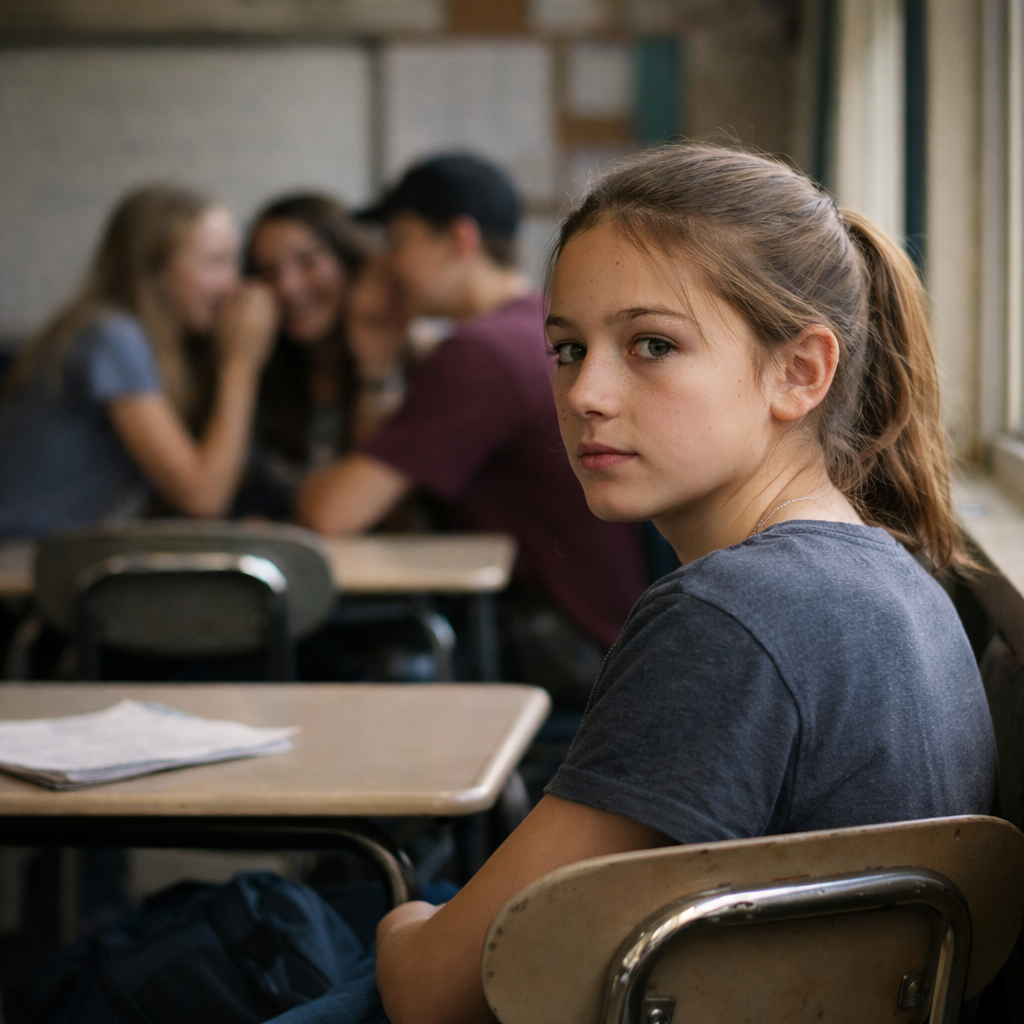
Part Six in An Eight-Part Series in The Thriving School Brief
About This Series
Inside the Adolescent Mind is a multi-part series examining how adolescent brain development intersects with identity, learning, and school design.
In the articles ahead, we will explore how emotions shape behavior, how sleep and stress affect cognition, how belonging influences decision-making, and how experience drives growth across adolescence.
Throughout the series, we return to a shared inquiry:
How might we design school systems that align with how adolescents actually develop?
When I was an assistant principal, there were subtle warning signs before a fight.
The hallway music would start; we had student-selected playlists blasting throughout the passing period. The volume from a cluster of students would rise above the din of music. The movement of students would shift in a way experienced adults learn to recognize before anything visible happened.
This was 2007. Students were on MySpace. A few had flip phones. There were no viral videos, no live streams, no Snapchat stories amplifying conflict in real time. And yet the audience effect was still powerful. Peer attention did not require algorithms. It required proximity.
Two girls were facing each other, their voices rising. “Say that to my face,” one student screamed. And then the ritual: she slowly removed her earrings. Not frantically. Not impulsively. Deliberately. The gesture communicated something unmistakable: I know what I’m doing. You can still back down.
But by then, backing down was no longer simple. An audience had formed.
When the first punch landed, everything accelerated—hair pulled, bodies surging, students shouting, adults rushing in. As we pulled the girls apart and walked them to separate rooms, they were trembling. Adrenaline was still moving through their bodies. One seemed almost relieved to be interrupted. The other continued shouting what she would do “if we were alone,” still performing for an audience that was no longer physically present.
The fight itself lasted seconds. The ripple effects lasted several days.
There were suspensions and parent calls, paperwork and re-entry meetings. There were hallway retellings and classroom side conversations. The entire building’s tone shifted. It felt like an exploding piñata—every student wanted a piece of the candy, a version of the story to own and retell.
At the time, these fights felt maddening and disruptive. With a developmental lens, I see something more precise. This was the adolescent social brain at work inside a particular school culture and climate.
The Social Brain Is Not a Distraction. It Is the Work.
Adolescence is the developmental window when belonging and status move to the center of identity. Young people are not only asking, “What do I think?” They are asking, “Who am I in this community?” and “How am I being seen by others?”
Research on adolescent social development shows the brain is especially sensitive to peer evaluation. Being watched changes behavior. Being excluded feels intense. Perceived disrespect can register as a real threat to identity and belonging. When status feels at risk, the body responds quickly—heart rate increases, attention narrows, urgency rises.
This is not immaturity. It is social wiring.
The slow removal of earrings was not impulsivity. It was signaling status and social intent.
Once an audience forms, conflict becomes performance. The question shifts from “Are we upset?” to “Who will hold ground?” Public backing down can feel intolerable because identity is still forming and deeply tied to peer perception.
When adults intervened, we interrupted a fight. But we were also interrupting a social negotiation about status, belonging, and identity.
What Is Physically Happening in the Social Brain
When adolescents feel socially threatened, their bodies respond quickly. A laugh at the wrong moment. A whispered comment. A glance exchanged between peers. A comment interpreted as disrespect. Even if the threat is ambiguous, the body reacts before the thinking brain has time to interpret. Heart rate increases. Muscles tighten. Breathing shifts. Attention narrows. The body prepares for action.
Under social threat, long-term consequences fade into the background. Immediate status protection feels urgent. The nervous system is not calculating tomorrow’s suspension or next week’s reputation. It is responding to the now.
This helps explain why being laughed at can feel overwhelming. Neuroscientific research demonstrates that social rejection activates stress systems similar to physical pain. It also explains why adolescents may freeze or explode under peer attention.
For some, the stress response leads to outward action—voice raised, posture squared, quick words, physical escalation. For others, it leads to shutdown—silence, avoidance, withdrawal, compliance that looks calm but feels constricted inside. Both are nervous system responses.
Peer presence adds another layer. When adolescents are observed by peers, the parts of the brain that respond to reward become more active. Social approval, laughter, encouragement, or even notoriety can heighten the sense of payoff in risky behavior (like “winning” a fight). Experimental studies show that risk-taking increases significantly in the presence of peers. The social brain amplifies both threat and reward.
Under these conditions, judgment shifts. The question becomes less “Is this wise?” and more “How will this play in front of others?”
Humiliation lingers because the body remembers it. Social pain activates stress responses that can be re-triggered later in similar contexts. A student who has once felt embarrassed in front of peers may become hyper-alert to future moments of exposure.
In these states, adolescents are not choosing between good and bad behavior in a calm, neutral way. They are navigating perceived threat, reward, and identity under observation.
The body is not weighing tomorrow. It is responding to now.
Understanding this does not excuse harmful behavior. It clarifies why escalation can feel sudden and why recovery sometimes requires more than a directive to “calm down.”
The social brain is fast. Regulation takes practice and intentional adult design.
Culture and Climate: The Context the Social Brain Lives In
School culture is the way we do things around here. The school climate is the way it feels around here. Both directly shape adolescent social development.
In a culture where practices that build belonging are explicit, where adults know students well, where dignity is protected, and where disagreement is practiced, the social brain has guardrails.
In a culture where status is negotiated primarily in hallways, where correction is public, and where adults feel distant, the social brain runs hot.
Climate determines how safe it feels to back down.
If backing down means humiliation, escalation becomes more likely. If backing down can happen privately, without loss of dignity, the body can settle.
The social brain thrives in environments where adults are “on your case, but on your side,” where accountability and belonging coexist. High expectations combined with visible care create something powerful: accountability to something larger than oneself.
Belonging does not eliminate conflict. It changes how conflict unfolds.
Promotion: Building Belonging Before Crisis
Promotion is Tier 1 school culture design. It is the daily design of environments where every student has a trusted adult, a consistent peer group, and a visible place in the community. Belonging grows from that consistency.
In secondary schools, this means structures where every student has:
A trusted adult who knows them well
A small peer group where they are seen consistently
Regular opportunities to reflect on identity and relationships
Clear norms for disagreement and repair
Advisory programs, when designed intentionally, can serve this function. Advisory is not a scheduling placeholder. It is a structural opportunity to shape identity formation intentionally and it can be a rehearsal space for the social brain.
The hallway is a stage. Advisory can be a workshop.
In advisory, students can unpack social misinterpretations before they turn into public spectacle. They can explore what respect means. They can practice setting boundaries without escalation. They can feel the presence of an adult who holds them accountable and holds them steady.
When students experience belonging consistently, something shifts. They feel accountable not only to rules, but to relationships. That sense of belonging often reduces the need to defend status publicly.
Prevention: Catching Escalation Early
In our school, a skillful social worker and counselor sometimes intercepted conflict before it exploded. They caught wind of brewing tension and pulled students aside early. They removed the audience. They lowered the emotional temperature. They offered face-saving exits. They reframed misinterpretations.
Without spectacle, escalation softened.
Prevention is not about surveillance. It is about relational proximity, having adults close enough to students to sense the shift before it becomes physical.
Prevention depends on relationships. If students have a trusted adult to approach when social situations become messy, conflict can move from hallway performance to private processing.
The social brain does not calm through command. It calms through connection.
Intervention: When the School Day Must Pause
Sometimes promotion and prevention are not enough.
When fights erupted, we responded with suspension and mediation. Those steps were necessary for safety and accountability. But intervention must do more than remove students from the building. Intervention must address the social and identity layer.
An authentic intervention process should:
Interrupt learning temporarily for everyone involved
Name the harm clearly
Provide space for reflection
Include meaningful repair
Reintegrate students thoughtfully
Intervention should not be rushed because it disrupts schedules. Social injury is public. Repair must feel real. When done well, intervention communicates something powerful: your behavior matters, your relationships matter, and you still belong here.
Designing Classrooms for the Social Brain
Hallway fights are dramatic expressions of the social brain. But most social brain activation happens quietly in classrooms.
It happens when a student is corrected publicly. When laughter follows a wrong answer. When sarcasm lands harder than intended. When grades are projected. When group work turns into subtle exclusion. When a student is asked to read aloud and feels every pair of eyes shift toward them.
The adolescent social brain activates whenever status, belonging, or visibility are at stake, not only during overt conflict.
In adolescence, peer perception is rarely neutral. Being seen can feel energizing or threatening depending on the context. A classroom can either lower unnecessary social exposure or heighten it.
Public correction may feel efficient to an adult. For an adolescent, it can feel like status injury. Even when the tone is calm, being singled out in front of peers can trigger defensiveness. Attention narrows. Justification rises. Cooperation becomes secondary to protecting dignity.
This does not mean classrooms should eliminate expectations. It means classrooms should sequence dignity before correction. Private redirection, separating behavior from identity, and normalizing mistakes all reduce unnecessary social threat. When students know they will not be humiliated, they are more willing to engage, risk error, and accept feedback.
At the same time, it is important not to misunderstand the social brain as something that must be suppressed. Adolescents love controversy. They are drawn to debates about fairness, justice, power, and belonging. They want to test ideas. They want to challenge assumptions. They want to see how their identity holds up in disagreement.
The same wiring that escalates hallway conflict can fuel rigorous academic dialogue when structured intentionally. Without structure, disagreement becomes spectacle. Volume rises. Sides harden. Identity fuses with being right. With structure, disagreement becomes rehearsal.
Classrooms aligned with the social brain teach students how to engage controversy productively. They establish norms for challenging ideas without attacking people. They model how to say, “I disagree” without implying disrespect. They create protocols where every voice is heard before conclusions are drawn.
Structured academic controversy, dialogue circles, and facilitated debates allow adolescents to practice holding strong opinions while maintaining connection. Students learn that backing down from an argument does not equal social death. They learn that changing their mind can be a sign of strength rather than weakness.
This matters because most adolescent conflict begins not with violence, but with misinterpretation. A comment taken as disrespect. A joke received as insult. A disagreement framed as personal attack.
When classrooms provide language for navigating disagreement, the social brain has a script other than escalation. Students begin to experience that status does not require dominance. Belonging does not require performance. Respect can be preserved without spectacle.
In this way, classroom design becomes preventative Tier 1 social infrastructure. Reducing unnecessary public threat lowers the baseline activation of the social brain. Channeling social energy into structured debate gives adolescents a productive outlet for their need to test identity.
The classroom becomes less of a stage and more of a workshop. Every day, students are not only learning content. They are learning how to disagree without escalating. How to accept correction without collapse. How to risk being wrong without losing belonging. How to hold identity without attacking someone else’s.
When classrooms intentionally align with the social brain, they do more than prevent fights. They build capacity.
The Social Brain and MTSS
Multi-Tiered Systems of Support (MTSS) often focus heavily on academic data and behavioral referrals. But the social brain demands that we examine culture and climate as Tier 1 infrastructure.
At Tier 1, schools must intentionally build belonging through culture and climate design.
At Tier 2, they must identify students whose social regulation skills are still emerging and provide targeted support.
At Tier 3, they must intervene deeply when trauma, instability, or repeated social injury compromise safety.
If Tier 1 culture does not create belonging, more students move into Tier 2 and Tier 3.
Sometimes what appears to be defiance is a student protecting status or identity. Sometimes what appears to be aggression is a student protecting dignity. Sometimes what appears to be indifference is a student who does not yet feel connected to anything larger than themselves.
The Long View
As discussed in earlier pieces on the pruning brain, the myelinating brain, the emotional brain, the integrating brain, and the tired brain, adolescent development is cumulative. The social brain does not operate in isolation. Biology, repetition, identity, and belonging are intertwined in every secondary school hallway and classroom.
Looking back, this fight was not random. It was predictable within its context.
It was a predictable outcome in a socially charged environment where identity was constantly negotiated.
Adolescents are not irrational. They are socially attuned.
The question is not whether the social brain will influence behavior. It will.
The question is whether schools design culture and climate that guide it toward belonging, accountability, and growth.
The hallway will always be a stage. Secondary schools must also build rehearsal spaces.
Promotion builds belonging. Prevention builds connection. Intervention builds repair.
When culture and climate align with adolescent development, the social brain becomes an asset rather than a liability.
And that is the work of MTSS designed for the whole adolescent.
Resources:
Blakemore, Sarah-Jayne, and Kathryn L. Mills. “Is Adolescence a Sensitive Period for Sociocultural Processing?” Annual Review of Psychology, vol. 65, 2014, pp. 187–207.
Eisenberger, Naomi I., Matthew D. Lieberman, and Kipling D. Williams. “Does Rejection Hurt? An fMRI Study of Social Exclusion.” Science, vol. 302, no. 5643, 2003, pp. 290–292.
Gardner, Margo, and Laurence Steinberg. “Peer Influence on Risk Taking, Risk Preference, and Risky Decision Making in Adolescence and Adulthood: An Experimental Study.” Developmental Psychology, vol. 41, no. 4, 2005, pp. 625–635.
